
Notes
From Experience: Wins, Fails, and What Stuck
Weigh Your Flour.* Always use kitchen scales for the best results. Gluten-free flours are much lighter and behave differently from regular wheat flour, so measuring by cups can be very inaccurate. Give the Dough the Full 10 Minute Rest. After mixing, the dough may feel sticky and look a little rough, and that is completely normal. Letting it rest for 10 minutes allows the flour to absorb the moisture properly. This helps the dough become smoother, easier to handle, and consistent when rolling out. Use Only a Light Dusting of Flour. When bringing the dough together and rolling it out, use just enough extra gluten-free flour to stop sticking. Too much flour can dry the dough and make the final pizza base dense instead of soft and light. A little goes a long way here. Roll Gently for an Even Base. A rolling pin gives the best result for this dough. Roll gently from the centre outward and try to keep the thickness even across the whole base. This helps the pizza cook evenly and gives you a better balance of crisp edges and a soft centre. Lightly Oil the Base for Extra Crust. Before adding your toppings, lightly spray or brush vegetable oil over the edges and a little across the centre of the dough. This helps create a more golden, slightly crispier crust and gives the finished pizza that proper pizzeria style finish. Do Not Overload Your Toppings. It is tempting to pile everything on, but too many toppings can weigh the dough down and stop the base from cooking evenly. A simple combination often gives the best result, with a crisp base, bubbling cheese, and toppings that cook beautifully.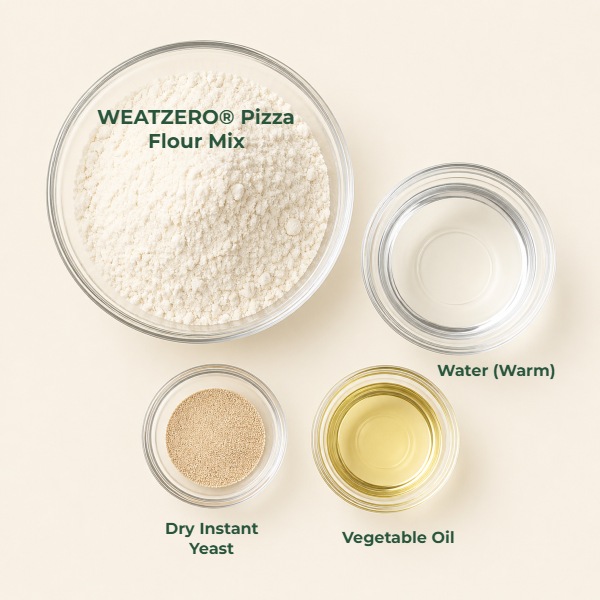
Ingredients
Pizza Base
- 425 g WEATZERO® Pizza Flour Mix - weigh using scales
- 350 mL Warm Water (37°C)
- 7 g Dry Instanrt Yeast - 1 sachet
- 20 g Vegetable Oil
- Extra Gluten-Free Flour for dusting and rolling
For Baking
- Light Oil Spray or Extra Vegetable Oil - for greasing pizza pans
- Your Favourite Pizza Toppings

WEATZERO Pizza Flour MIx Equipment
Method
Mix the Dough
- In a large mixing bowl, weigh the WEATZERO® Pizza Flour Mix.

- Add the warm water (37°C), dry yeast, and vegetable oil. Mix using a wooden spoon or spatula until everything comes together into a soft dough.

- The dough will feel slightly sticky, and that is exactly right. Just make sure everything is fully combined and holding together as a dough.
Hold
- Leave the dough to stand for 10 minutes.

- This step is important because it allows the flour to properly hydrate and helps create a smoother final dough.
Bring the Dough Together
- Lightly dust a clean kitchen bench with gluten-free flour.
- Transfer the dough onto the floured surface and gently work it together using your hands until it becomes smoother and more even. You are not kneading like traditional wheat dough, just helping it come together into a smooth, cohesive dough.

- Divide the dough into 2 equal portions.
- Shape each portion into a smooth round dough ball.

- Place each dough ball into a lightly oiled bowl, pie dish, or shallow tray.
Let the Dough Rise
- Cover each bowl loosely with a clean tea towel or plastic wrap.
- Place in a warm spot and allow the dough to rise for 1 hour, or until noticeably puffed and lighter in texture.

- The dough may not fully double in size like traditional wheat dough, but it should feel softer and well risen.
Preheat the Oven & Prepration
- Preheat your oven to 240°C conventional (464°F, no fan) / 220°C fan forced (430°F)

- Getting the oven fully hot before baking helps create a better crust and a crisp golden base.
- Lightly oil two 33.5cm round pizza pans and set aside.

- While the oven is preheating, prepare your pizza toppings so everything is ready to assemble once the bases are rolled out.
Roll Out the Pizza Bases
- Lightly dust your bench again with gluten-free flour.
- Using a rolling pin, gently roll each dough ball into a 33.5cm round pizza base.

- Try to keep the thickness even throughout for the best bake.
- Carefully transfer each base onto the prepared pizza pans.

- If you like a slightly thicker crust edge, leave the outer rim a little fuller.
- For a crispier crust, lightly spray or brush a little vegetable oil over the edges and lightly across the centre of the base before adding toppings.
Add Your Toppings
- Spread over your pizza sauce, cheese, and chosen toppings.

- Try not to overload the pizza as too many toppings can make the base heavy and prevent it from cooking evenly. Simple combinations often give the best result.
Serving Suggestions
- Our favourite is a tomato base with thinly sliced potato, mozzarella, and a little pepperoni for extra flavour.
- A classic vegetarian option works beautifully too with tomato base, mozzarella, mushrooms, capsicum, olives, red onion, and fresh basil added after baking.
Bake
- Bake for 20 to 25 minutes, or until the crust is golden, the cheese is bubbling, and the base feels firm underneath.

- The edges should be lightly browned and the base should lift easily from the pan.
- Slice and serve straight away while hot.

Storage
- Store leftover cooked pizza in an airtight container in the fridge for up to 2 days.Reheat in the oven or air fryer for the best texture.
Freezing
- The baked pizza bases can be frozen for up to 2 months. Allow them to cool completely first, then wrap well and freeze. Thaw overnight in the fridge before reheating.